
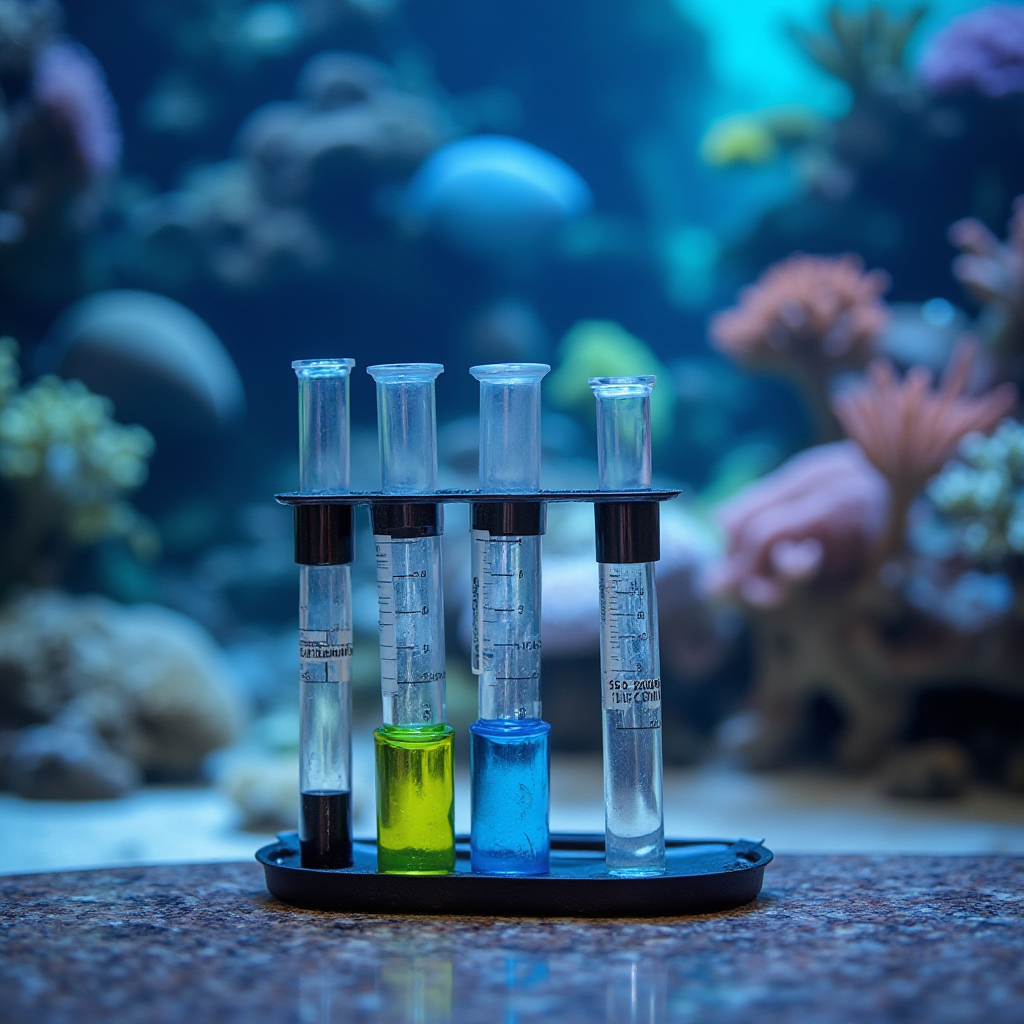
Reef Tank Water Parameters: Calcium, Alkalinity, and Salinity Explained
If you came to reef keeping from a freshwater tank, your instincts are going to work against you here. Ammonia, nitrite, and pH are still worth knowing, but they’re not the numbers that make or break a reef. The numbers that actually decide whether your corals grow or slowly recede are calcium, alkalinity, and magnesium — and almost nobody explains why until after a beginner has already lost a few frags finding out the hard way.
I made that mistake myself. My first reef tank had picture-perfect ammonia and nitrate, and I still watched a hammer coral shrink for three weeks before I figured out my alkalinity had drifted low enough to starve it. The tank “looked fine.” It wasn’t.
The Numbers That Actually Matter (Reef 2026)
| Parameter | Ideal Range | What It Does | Danger Sign | Test Frequency |
|---|---|---|---|---|
| Salinity | 1.025 – 1.026 SG (35 ppt) | Baseline osmotic stability for everything in the tank | Livestock stress, coral tissue recession | Weekly, and before/after any top-off |
| Alkalinity (KH) | 8 – 9.5 dKH | Buffers pH, supplies carbonate for coral skeleton | Swings faster than you’d expect once corals mature | 2-3x weekly on an established reef |
| Calcium | 400 – 450 ppm | Raw material for coral skeleton growth | Slow, stunted growth; won’t crash a tank overnight | Weekly |
| Magnesium | 1250 – 1350 ppm | Keeps calcium and alkalinity from precipitating out | Chasing Ca/Alk without success | Every 2 weeks |
| Phosphate | Under 0.03 ppm | Nutrient export target | Above this, coral coloration fades and algae wins | Weekly |
| Nitrate | 1 – 10 ppm | Some is fine — reef tanks aren’t zero-nitrate systems | Both “too high” and “near zero” cause problems | Weekly |
Why These Four Move Together
Calcium, alkalinity, and magnesium aren’t independent dials — they’re a single balancing act. Corals pull calcium and carbonate out of the water to build their skeletons, which is exactly what drains your alkalinity over time on any tank with real coral growth. Magnesium is the part beginners skip, and it’s the reason: magnesium keeps calcium and alkalinity from binding together and precipitating out of solution before your corals ever get to use them. Let magnesium drop and you can dose calcium and alkalinity all day without your numbers actually holding.
Salinity sits underneath all of it. It’s not glamorous, but a saltwater tank running long-term at the wrong specific gravity puts chronic stress on everything living in it, corals included. Check it with a refractometer, not a swing-arm hydrometer — the cheap hydrometers are notoriously off by enough to matter.
My Testing and Dosing Routine
Weekly, every tank:
- Salinity (refractometer)
- Alkalinity
- Calcium
- Nitrate and phosphate
Every two weeks:
- Magnesium
How I dose: Once you know your tank’s actual consumption rate — how much alkalinity and calcium it eats per day — a two-part dosing routine (or a calcium reactor once you’re stocked heavily with SPS) keeps things far more stable than reactive dosing after a bad test result. Dose in small, consistent amounts on a schedule rather than big corrections after the fact. Alkalinity in particular should never move more than about 1 dKH in a single day — fast swings stress coral tissue even when you’re moving the number in the “right” direction.
Common Mistakes I See (and Made)
- Testing only calcium and ignoring alkalinity. They have to be read together, or neither number tells you anything useful.
- Skipping magnesium entirely. It’s the most commonly ignored of the big three and the most common reason dosing “doesn’t work.”
- Trusting a cheap hydrometer. Get a refractometer and calibrate it with a known-salinity reference fluid.
- Big corrective doses after a bad reading. A large jump in alkalinity or calcium is more stressful to coral tissue than the original imbalance was.
- Forgetting that new saltwater mix isn’t automatically “correct.” Test your salt mix after mixing — brands vary, and batches vary.
Full Reef Parameter Checklist
- Salinity 1.025–1.026 SG, checked with a refractometer
- Alkalinity 8–9.5 dKH, tested 2-3x weekly
- Calcium 400–450 ppm, tested weekly
- Magnesium 1250–1350 ppm, tested every 2 weeks
- Phosphate under 0.03 ppm
- Dosing changes are small and spread out, not reactive corrections
- New saltwater batches tested before use, not assumed correct
Final Verdict
A reef tank doesn’t fail because of one bad number — it fails because calcium, alkalinity, and magnesium quietly drift out of balance with each other while everything still “looks fine.” Test all three together, dose in small consistent amounts, and don’t chase corrections after the fact.
Ready to put this into practice? Use the Aquarium Wizard for a tank-specific starting plan, or read Saltwater Aquarium Basics for Beginners if you’re still deciding whether a reef tank is the right next step. If nuisance algae shows up as your nutrients settle in, Reef Tank Algae Control walks through fixing it at the source.
Keep moving from reading to action.
Use the related guides to go deeper, check the shop if you need matching accessories, or join the email list for new guides and product updates.
Get new guides, product updates, and practical aquarium planning notes by email without waiting to check back manually.
Use the contact page if you want direct help instead of general email updates.
Related Guides
Freshwater vs Saltwater Aquariums
Compare freshwater and saltwater aquariums by cost, maintenance, fish options, equipment, and beginner fit so you can choose the right tank for your home or small office.
Protein Skimmers Explained: Do You Need One, and How to Size It
What a protein skimmer actually does, which saltwater tanks genuinely need one, and how to size one correctly instead of guessing from the box label. Real lessons from tanks in Norman, Oklahoma.
Reef Tank Algae Control: Identifying and Beating Nuisance Algae
The six most common types of nuisance algae in reef tanks, what actually causes each one, and how to fix the root cause instead of just scrubbing rocks every week. Real lessons from tanks in Norman, Oklahoma.