
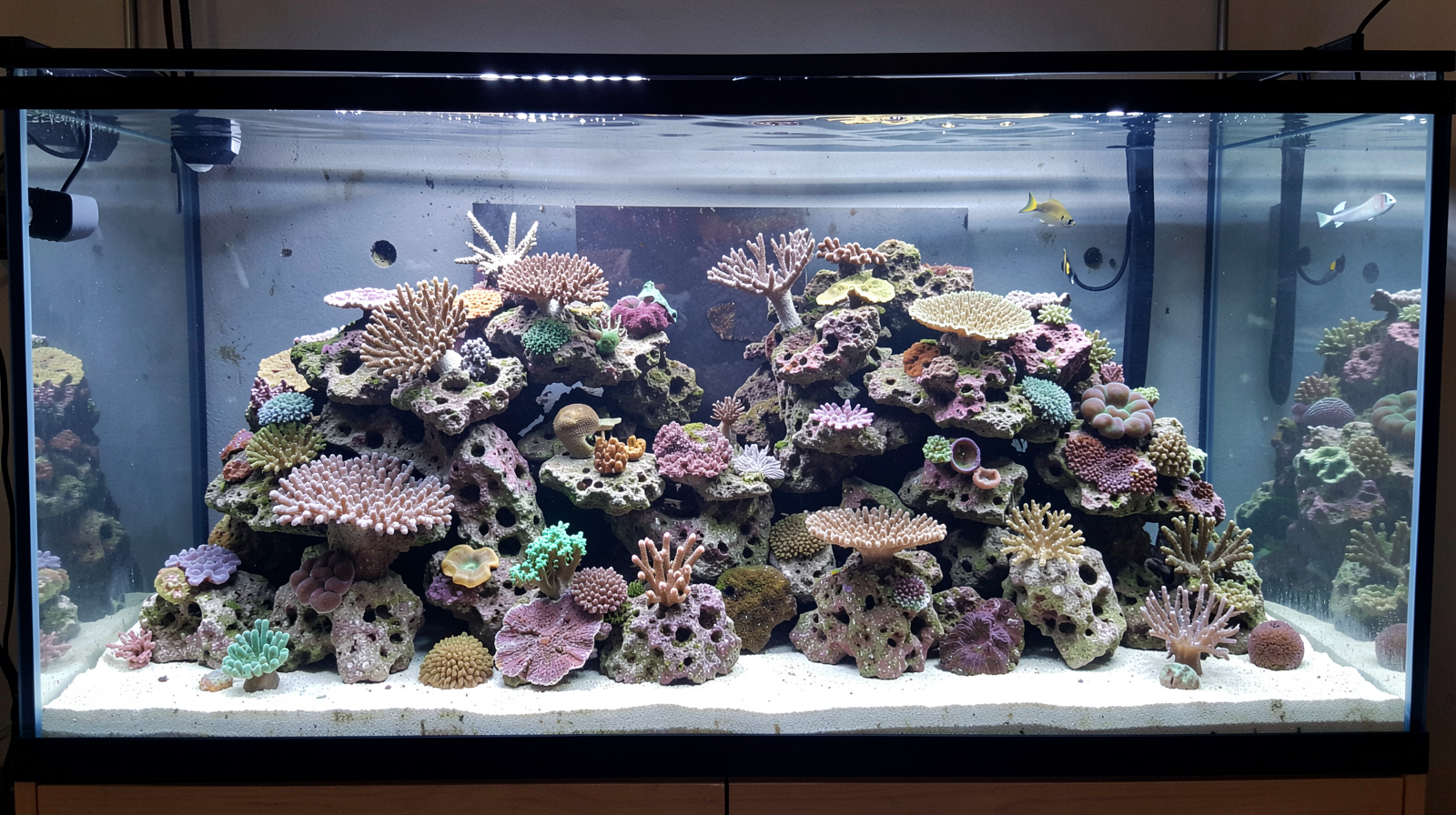
Taming the Gunk: Making Your MRC Filter Roller Work Right
Written by Diamond Dave — October 25, 2026
A deep dive into keeping that mechanical filtration dialed in on your reef tank.
The newsletter for established saltwater keepers who want to keep their biofilter running smoothly without guessing about media loadouts.
Quick rundown: Why we bother with MRC rollers in reef tanks
In a reef tank, your biggest enemy isn’t usually the chemistry—it’s the physical junk. We call this detritus, but it’s really just fish waste, uneaten food, and decaying organic matter. If that stuff sits on the sand or gets trapped in your live rock, it rots and creates a mess for your biological filter to clean up. That is why we use MRC (Mechanical Reef Circulation) rollers.
The goal here is simple: catch the heavy stuff before it settles. Mechanical filtration acts like a sieve. By pulling water through a series of media types, you are physically grabbing those particles out of the water column. If you skip this step or don’t do it right, your biological filter (the bacteria living on your rocks and in your bio-media) has to work overtime to break down all that waste. Keeping the mechanical side dialed in keeps the rest of the system running smoothly and prevents those nasty spikes in organic load.
Setting up your roller correctly—it’s not just dropping stuff in
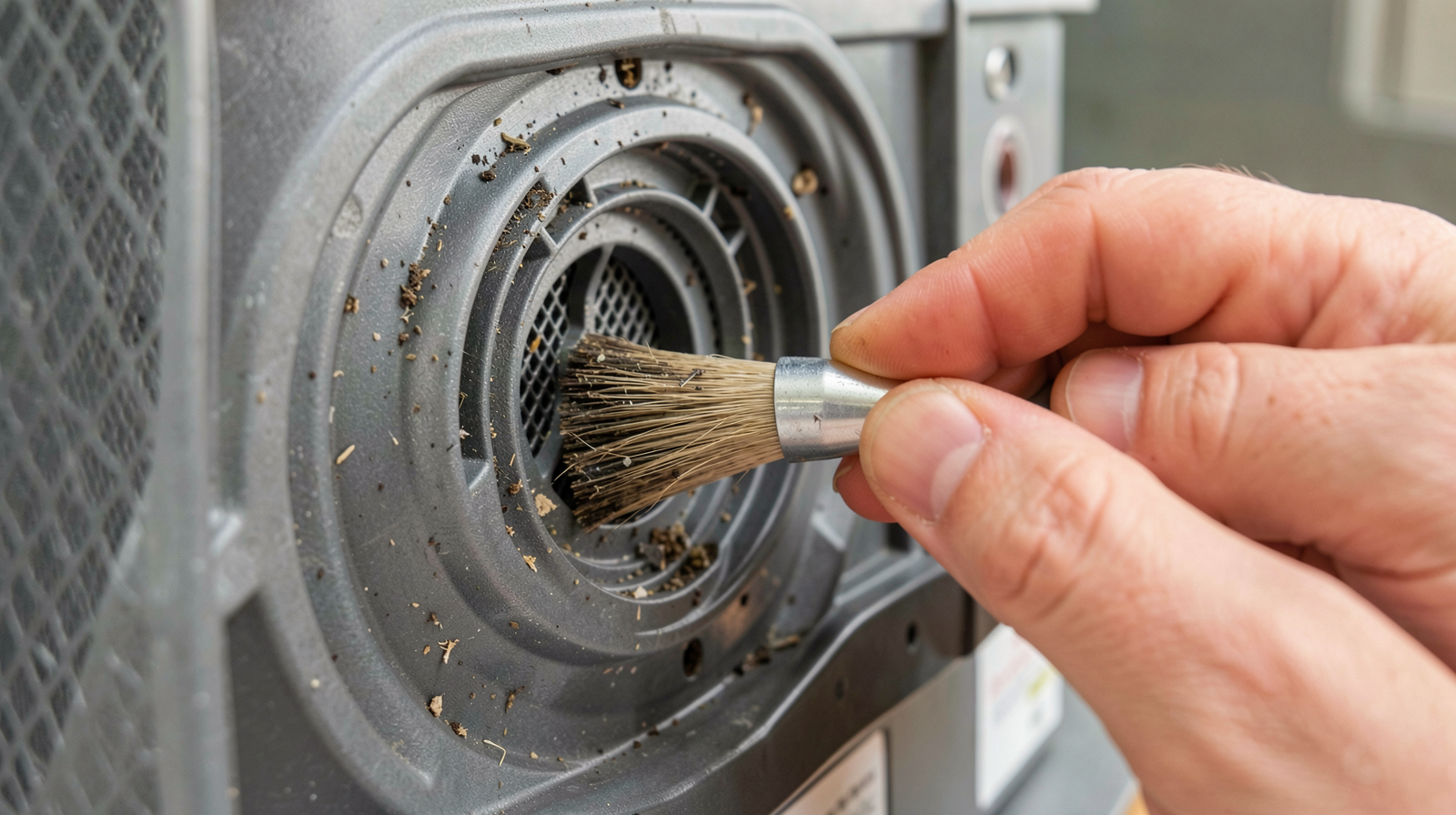
One thing I learned early on is that you can’t just throw a handful of sponges into a chamber and call it done. Water follows the path of least resistance. If you don’t think about how the water moves through your MRC setup, it will just zip past the media you spent money on.
When you are assembling your roller, you want to ensure the flow is forced through the media, not around it. This usually means placing your densest material first or using a baffle system to slow the water down. You want enough resistance so that every drop of water makes contact with the surface area of your sponges or pads. I always tell people to look at their plumbing: if you can see a clear “tunnel” where water is rushing through without touching anything, you need to reposition those pieces. It’s about creating a controlled bottleneck that forces the detritus to get caught in the fibers.
The dirty secrets of maintenance: When and how much to clean
I used to think I could just let my filter run forever until it looked gross, but that’s how you end up with a clogged system and poor flow. You have to be proactive. For an MRC roller, you aren’t looking for “clean” media—you’re looking for “functional” media.
You should check your rollers every week or two depending on your fish load. If you notice the water pressure dropping at the outlet or if you see a buildup of brown sludge on the surface of the pads, it’s time to rinse. Most people over-clean by scrubbing everything until it’s white again, which actually destroys the structure of some sponges. Instead, give them a quick spray with a hose (using tank water, never tap water) just to knock off the heavy debris. If you see that the media is falling apart or won’t hold water anymore, that’s when you swap it out for something new.
What goes in it? A look at the right stuff for different needs
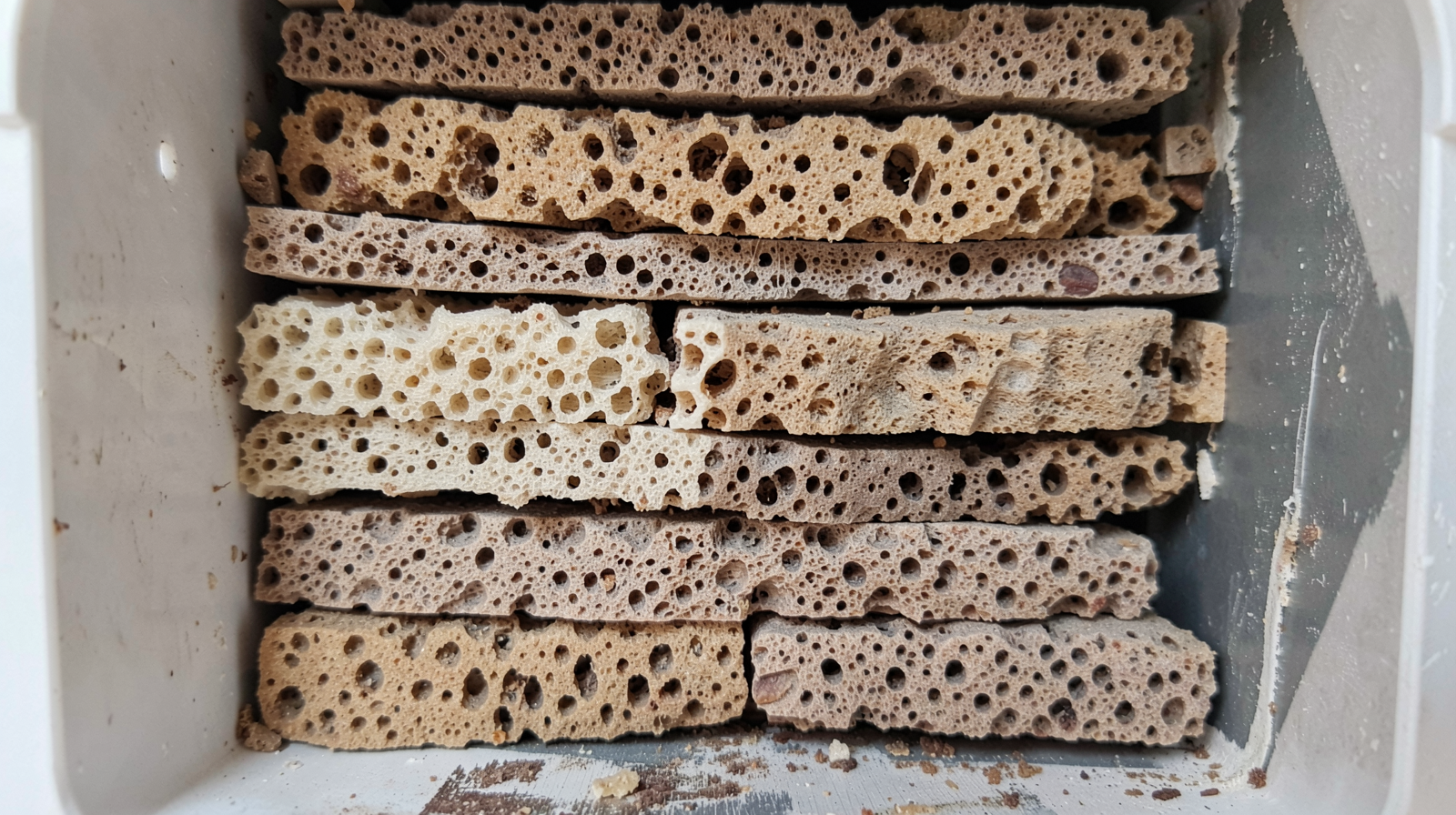
Not all filter media is created equal. You need a balance between “catching the big stuff” and “providing surface area.” If you only use fine foam, it will clog in an hour. If you only use coarse sponges, your water will stay cloudy. I usually recommend a layered approach:
- Coarse Sponges: These go first. They catch the big chunks of waste and protect the finer media from clogging too fast.
- Fine Foam Pads: These sit in the middle to grab the smaller particles that made it past the coarse layer.
- Porous Media (Synthetic Fiber): Use these toward the end of your mechanical run. They provide a massive amount of surface area and help polish the water.
| Media Type | Primary Job | Placement Tip |
|---|---|---|
| Coarse Sponge | Heavy Debris Removal | Entry Point |
| Fine Foam Pad | Particle Polishing | Mid-Stream |
| Synthetic Fiber | Surface Area / Flow Control | Exit Point |
Common mistakes I see folks making with their filters
The most common mistake I see is over-packing the chamber. It feels like more media equals better filtration, but if you pack it so tight that the pump has to struggle to push water through, you’re going to burn out your equipment or create a “dead zone” where waste just sits and rots inside the filter.
Another big one is using tap water to rinse your pads. The chlorine in tap water will kill off any beneficial bacteria that managed to settle on those sponges, and it can also leave behind minerals that eventually clog the pores of the media. Finally, people often forget about “pre-rinsing.” If you buy a brand new sponge and drop it straight into the tank, it might release a cloud of dust or manufacturing residue. Always give your new stuff a quick rinse in a bucket first so you aren’t shocking your fish with a sudden spike in particulates.
Your filter maintenance checklist before you close up shop today
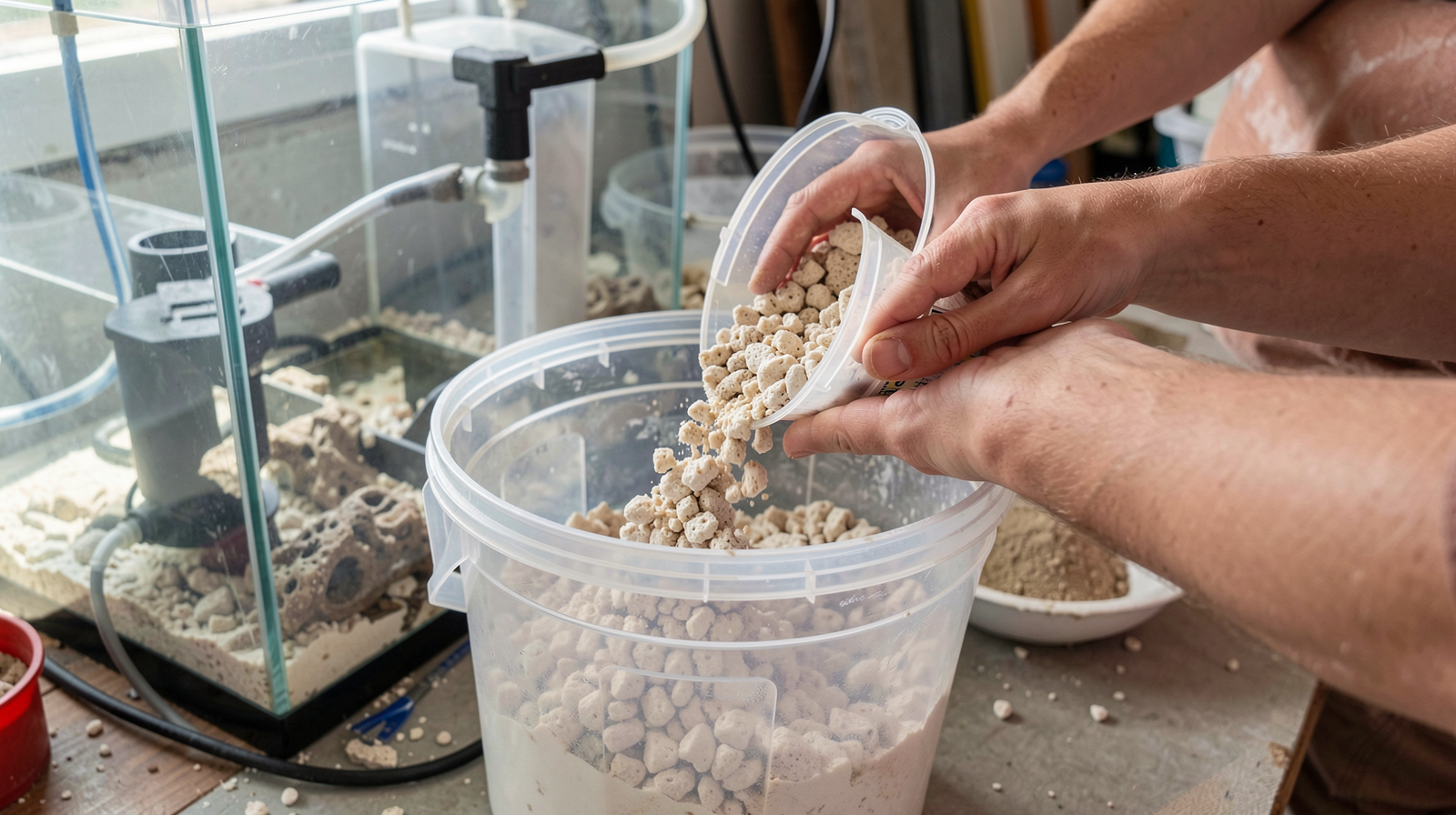
If you want to make sure your MRC roller is actually doing its job, run through these points. You don’t have to do this every day—maybe once a week is plenty for most home setups—but it’s good practice to keep an eye on:
- Flow Check: Is the water coming out of the return nozzle at the same strength as it was last week? If not, something is clogged.
- Visual Inspection: Look at your first layer of coarse sponge. Is it covered in thick brown muck? Give it a rinse.
- Pressure Balance: Ensure there isn’t a massive buildup of waste in the very first chamber that could be restricting the pump’s intake.
- Media Integrity: Check if any sponges are starting to tear or crumble; pieces of rotting sponge can actually become a source of waste themselves.
- Cleanliness: Make sure no large pieces of coral, rock, or “dead” organic matter have bypassed the roller and are sitting in your sump or display tank.
Source: Reefs.com
Get new newsletter issues, guides, and product updates by email.