
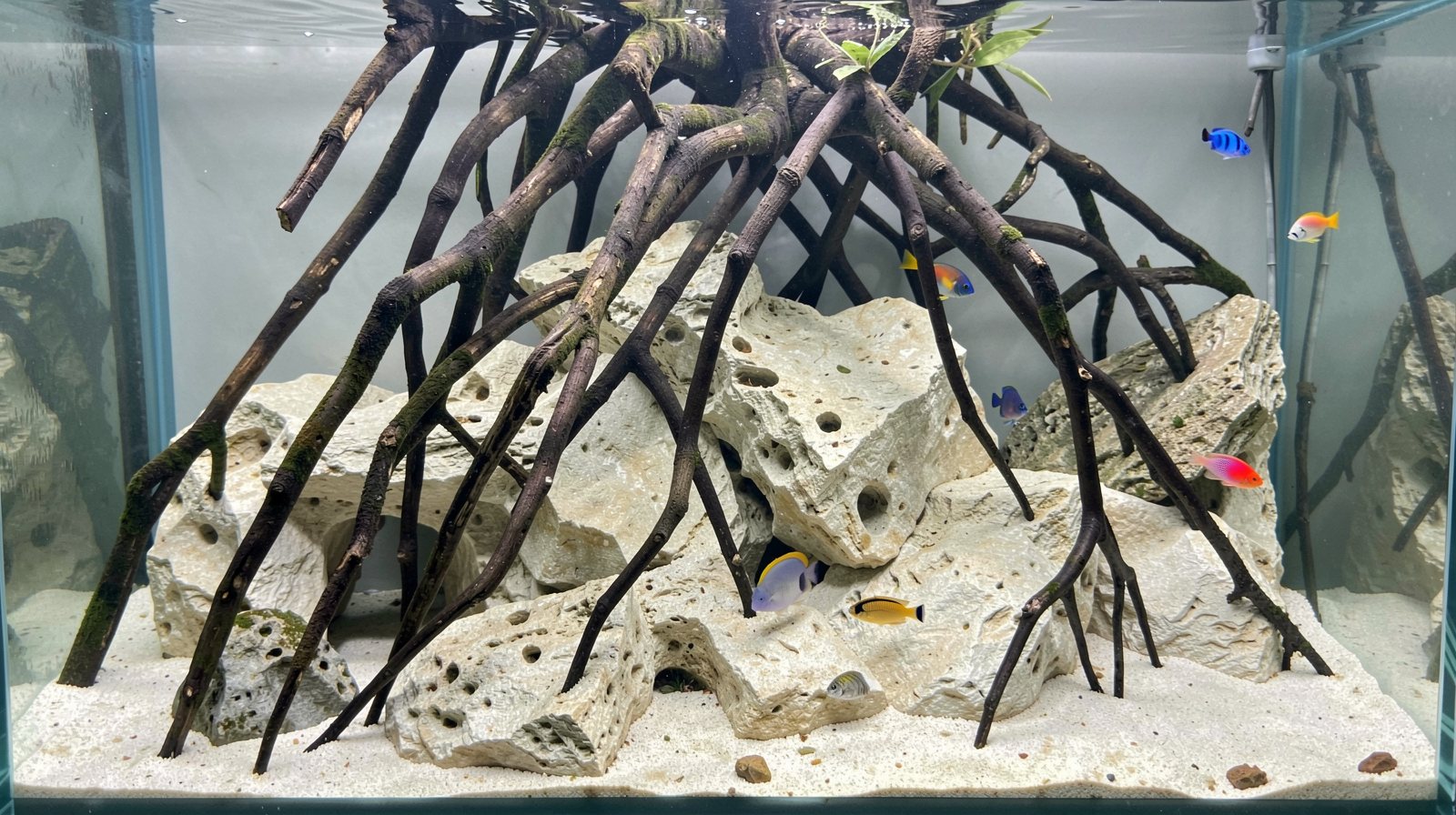
Keeping Your Mangroves Alive in a Small Tank
Written by Diamond Dave — November 5, 2026
A practical rundown for keeping those roots looking healthy without making things too complicated.
The newsletter for saltwater reef keepers who want to keep their beautiful mangroves thriving instead of turning brown halfway through the month.
First off: What are we even trying to do here?
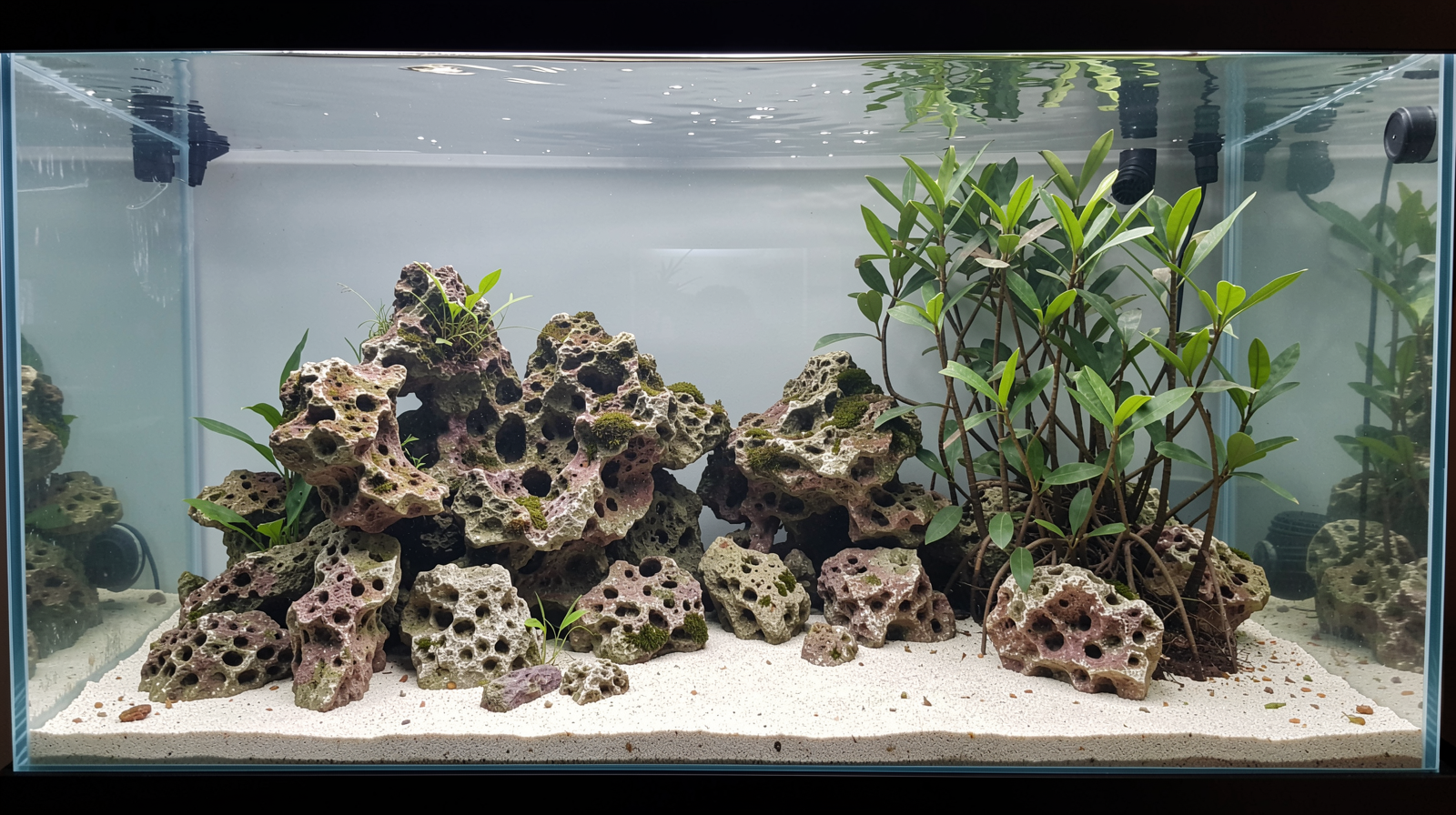
When people see a mangrove tree and think of putting it in an aquarium, they usually want that “wild” look—the tangled root system and those iconic prop roots sticking out of the water. It’s a great aesthetic for a large display because it adds massive amounts of vertical interest without needing as much fancy hardscaping. But I like to be upfront with people: mangroves are demanding plants. They aren’t something you just toss in a standard freshwater tank and expect them to thrive. In their natural habitat, they are adapted to specific tidal movements and high-mineral environments. When we bring them into a home aquarium, our goal is to mimic those conditions as closely as possible without turning your living room into a laboratory. You want that look, but you have to be willing to manage the water chemistry more actively than you would with a simple sword plant or an Amazon sword.
The Water Flow Thing: Not too much, not enough.
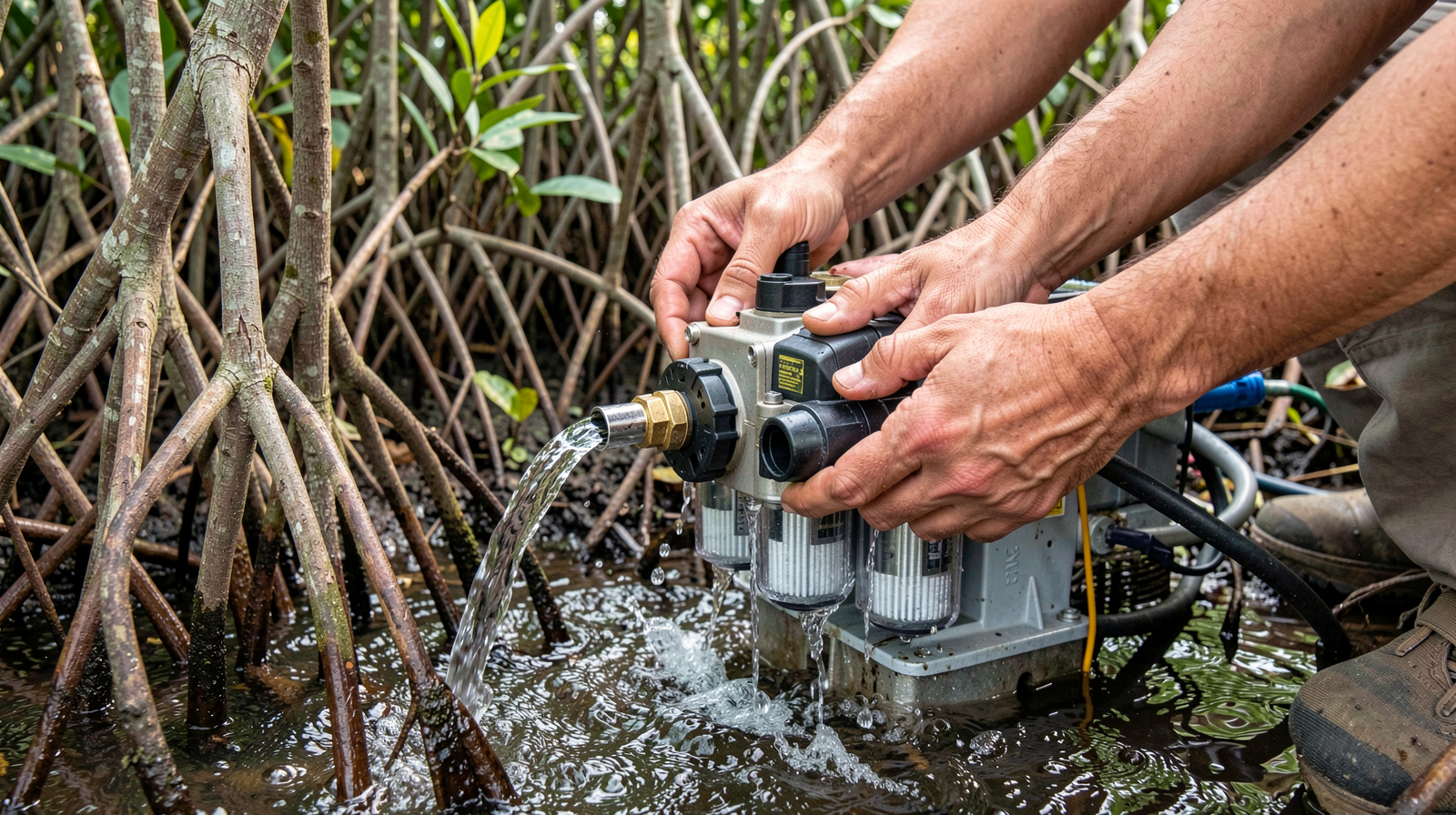
One of the biggest mistakes I see people make is overcompensating for the “tidal” aspect of mangroves by cranking up the flow until it’s a literal whirlpool. If your water is moving too fast, you’re going to strip the leaves off the branches and stress the root system. On the flip side, if the water is stagnant, those roots will start to rot because they aren’t getting enough oxygenated water passing over them. You want a “gentle but constant” flow. Think of it like a steady stream rather than a crashing wave. The goal is for the water to move the debris away from the base of the tree so it doesn’t sit there and decompose, while still allowing the leaves to stay attached. If you see your leaves fluttering violently or if sand is constantly shifting around the roots, dial that power back just a hair.
When things go south: Identifying the problem roots.
It’s easy to panic when you see some discoloration on a mangrove root, but most of the time, it’s a maintenance issue rather than an immediate death sentence. You need to learn what “normal” looks like for your specific tree so you can spot the deviations early. Here is how I usually break down the symptoms:
| Symptom | Likely Cause | What to do |
|---|---|---|
| Brown, mushy tips | Rot or lack of oxygen | Check flow and reduce organic waste near roots. |
| White fuzzy slime | Bacterial bloom/overfeeding | Clean debris and check for high nutrient spikes. |
| Yellowing leaves | Nutrient deficiency or low light | Adjust your fertilizer routine or move the light source. |
| Rapid leaf drop | Stress (temperature, flow, or chemistry) | Stabilize parameters before adding more fish. |
If a root is turning black and feels slimy to the touch, that’s usually a sign of rot. If it’s just a bit of brown on the very tip but the rest of the structure is firm, you might just need to adjust your water chemistry or flow.
Cleaning up shop without wrecking your setup.
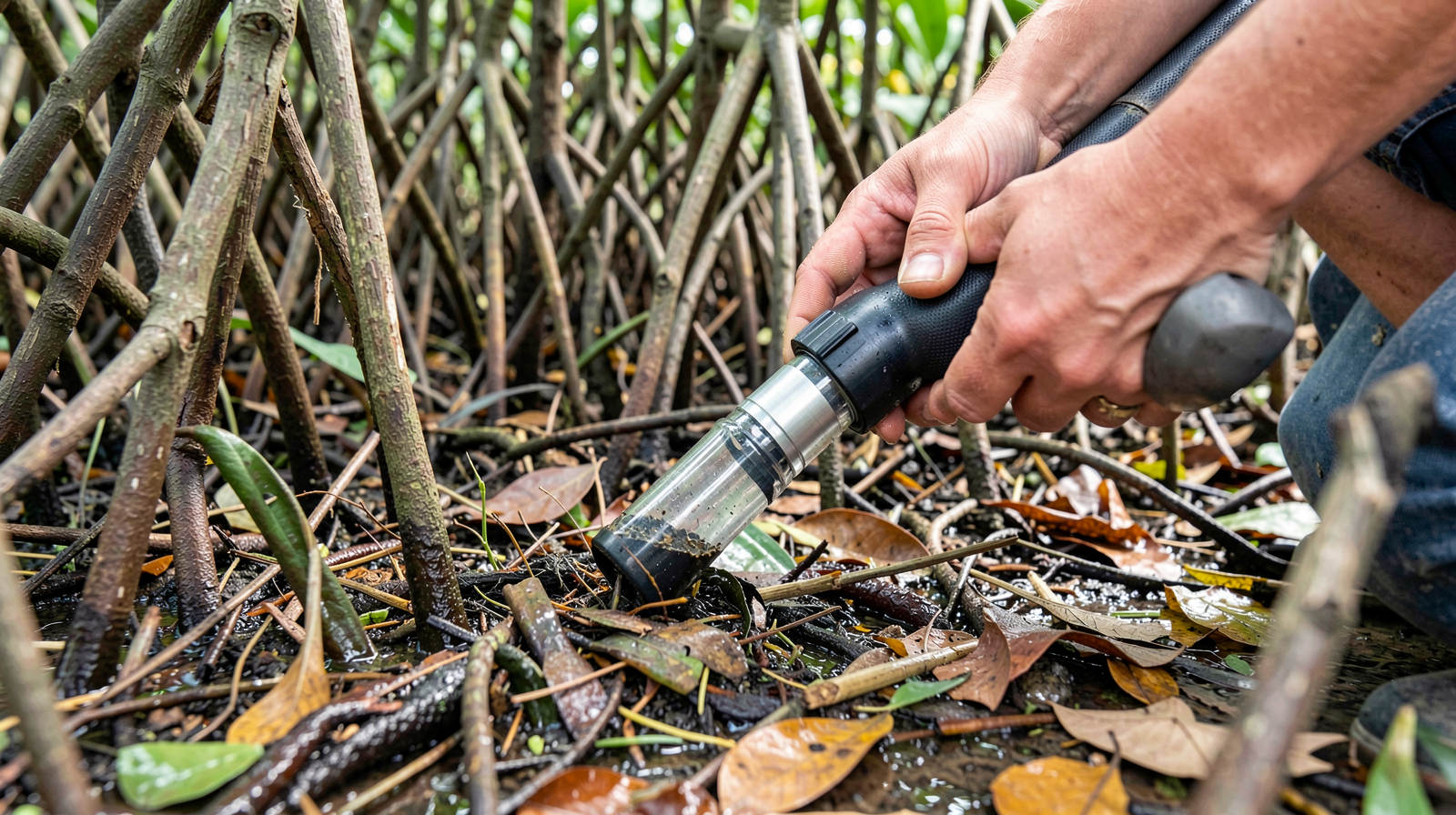
Mangroves are “messy” plants by nature. They drop leaves and organic matter, which eventually settles into those intricate root structures. If that debris sits there too long, it creates a localized pocket of high nutrients and low oxygen, which is exactly what leads to the rot I mentioned above. You don’t need to scrub the roots with a brush—that’s going to damage the delicate outer layer of the tree. Instead, use a siphon to gently vacuum out the heavy detritus from between the prop roots once a week. If you have a lot of “muck” trapped in the deep corners, you can use a soft-bristled brush or even just some manual agitation with your hand (or a long tool) to break up the waste so it can be sucked away. The key is being gentle; you want to remove the trash without bruising the tree itself.
What about salinity, nutrients, and light?
I try to keep this as simple as possible because over-complicating things usually leads to more problems than solutions. For most home setups using mangroves (like the Red Mangrove), you aren’t necessarily looking for full seawater levels, but you do need a mineral profile that isn’t “soft” like many freshwater tanks are. You want enough calcium and magnesium in the water so the tree can actually build its structure. Light-wise, they love intensity—they are tropical plants, so don’t be afraid to give them a strong light source during the day cycle. As for nutrients, since they are heavy feeders, you’ll need to ensure your liquid fertilizers aren’t just feeding the fish, but also providing enough minerals for the tree’s growth. It’s a balancing act: keep the water clean of waste while keeping it rich in the “food” the tree needs to stay healthy.
The quick checklist before you panic.
Before you start changing every parameter in your tank at once, run through this list. Most mangrove issues can be traced back to one of these three things first. If you check these and everything looks good, then we can start looking at more complex chemistry adjustments:
- Check the Flow: Is there a steady stream of water moving over the roots without being so strong that it’s shaking the branches?
- Inspect for Debris: Is there a pile of old leaves or fish waste trapped in the root base? If so, get it out.
- Test Your Hardness: Are your GH and KH levels too low? Mangroves struggle in very soft water.
- Observe the Leaves: Are they yellowing (low nutrients/light) or turning brown at the tips (rot/flow issues)?
- Check Temperature: Is your tank staying within a stable tropical range without massive swings during the night cycle?
Source: Coral Magazine
Get new newsletter issues, guides, and product updates by email.