
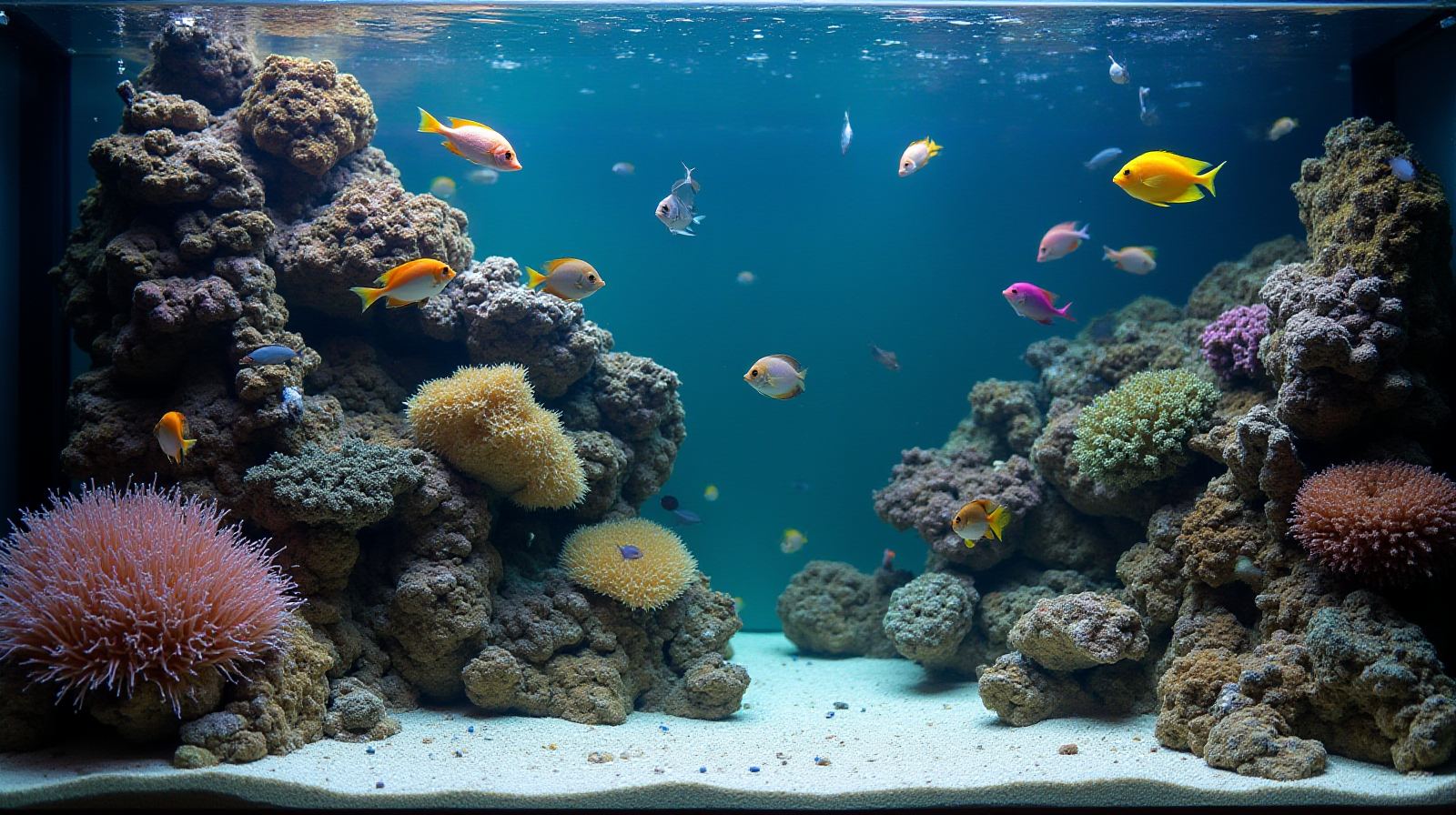
Don't Overstock: Building a Stable Reef Community for Your Tank
Written by Diamond Dave — September 7, 2026
Using species compatibility and natural niches to avoid stressing out your new fish friends.
Before you buy another critter: Thinking like an ecosystem
When people first get into the hobby, it is common to look at a spare corner of their tank and think they have room for one more fish just because there is physical space available. However, building a successful saltwater community isn’t about how many fish can physically fit inside the glass; it is about creating a balanced ecosystem where every inhabitant has its own place. Think of your tank as a small piece of real reef or a coastal environment. In nature, different species occupy specific “niches” to survive. If you put two different species in the same space that both try to do the exact same thing—like occupying the same territory or eating the same type of food at the same time—you are going to have problems. Success comes from choosing fish that coexist peacefully because they aren’t competing for the same resources.
The Golden Rules of Compatibility (and how to avoid drama)

Compatibility is more than just a “yes” or “no” on whether two species can live in the same tank; it involves understanding their behavior and temperament. For example, some fish are naturally territorial while others are active foragers. If you mix them without considering these traits, you might end up with one fish that is constantly bullied or another that is too aggressive for its neighbors to handle. A good rule of thumb is to consider how they interact during feeding times and where they spend their time in the water column.
Consider these three main factors before adding a new species:
- Aggression Levels: Some, like certain blennies, can be very territorial over specific rocks or holes.
- Size Variation: Keeping fish of vastly different sizes together can lead to smaller ones being bullied out of their space.
- Feeding Habits: If two types of fish both rely on the same microscopic organisms or small invertebrates as their primary food source, they will eventually compete and stress each other out.
Comparing a blenny’s territorial nature with a wrasse’s more active lifestyle is a good example of why you need to know how a species behaves before it enters your home reef.
Bioload 101: More fish = more waste (and potential problems)
Every living thing in your tank produces waste. In the marine world, this means that every additional fish adds a specific amount of organic matter—from food scraps and waste to the proteins they excrete—into your water column. This is what we call “bioload.” Your filtration system and the beneficial bacteria within it have a limited capacity to process this waste into something safe for the fish. When you add too many fish, or add them too quickly, you can overwhelm these systems, leading to spikes in ammonia or nitrites. These chemicals are toxic and can cause significant stress or death to your livestock. Keeping a stable tank is about ensuring that your filtration system can comfortably handle the total amount of waste produced by every resident in the tank. If you find yourself constantly struggling with water chemistry issues, it is often an indicator that the bioload has exceeded what your current equipment can manage safely.
Choosing your residents: Niche diversity over sheer numbers

It is tempting to buy a group of fish because they all look similar and beautiful together, but it is much better for the long-term health of your tank to choose based on “niche diversity.” Instead of having five different types of small, colorful fish that all hang out in the middle of the water column, you want a variety of roles. By selecting fish that perform different functions, you create a more stable environment where they aren’t competing for the same space or food.
Focus on filling these specific roles:
- Grazers: These species help keep algae and nuisance growth in check by feeding on it.
- Scavengers: These are your “clean-up crew” members that move through the bottom of the tank to eat leftovers and waste.
- Territorial Dwellers: These fish occupy specific areas, like rockwork or caves, providing a presence without roaming and bothering others.
By focusing on these roles rather than just counting heads, you create a community where each resident has a clear purpose and space to thrive.
The Slow Approach to Stocking Up (Don’t rush it)
One of the biggest mistakes I see newcomers make is trying to add three or four fish at once because they are excited about their new arrivals. This puts an immediate shock on your water chemistry. Instead, take a slow and deliberate approach. Add one new inhabitant at a time and wait several days before adding another. This gives you time to monitor the tank’s stability and ensure that your filtration system is keeping up with the increased bioload. During this waiting period, keep a close eye on behavior; if a fish seems stressed or if your nitrate levels start creeping upward, you can address those issues before they become full-blown emergencies. This patient method ensures that every new addition is a success rather than a gamble. Give each resident time to acclimate and establish their territory before bringing in the next neighbor for the community.
Source: Saltwater Aquarium Blog
Get new newsletter issues, guides, and product updates by email.