The Nitrogen Cycle Explained: Why Cycling Your Tank Matters
The nitrogen cycle is the single most important concept in aquarium keeping — and the one that causes the most early failures.
In my tanks in Norman, Oklahoma, I learned this the hard way. My very first 5-gallon betta tank looked perfect on day 3: clear water, right temperature, filter running. I added the betta on day 4. Within a week he was gasping at the surface and died despite my best efforts. The tank had no established beneficial bacteria to process his waste. That painful lesson taught me that a “running” tank is not the same as a cycled tank.
This 2026-updated guide explains the nitrogen cycle in plain English, why it matters so much for home and small-office aquariums, and exactly how to do it right.
The Nitrogen Cycle at a Glance
| Stage | What Happens | Toxicity Level | What You See in Tests |
|---|---|---|---|
| 1. Ammonia | Fish waste, uneaten food, and decay produce ammonia | Extremely toxic | Ammonia spike first |
| 2. Nitrite | Bacteria convert ammonia → nitrite | Still very toxic | Ammonia drops, nitrite rises |
| 3. Nitrate | Bacteria convert nitrite → nitrate | Much safer | Nitrite drops, nitrate appears |
| 4. Maintenance | Regular water changes remove excess nitrate | Manageable | Nitrate stays under 20–40 ppm |
What the Nitrogen Cycle Actually Is
The nitrogen cycle is your aquarium’s natural waste-processing system.
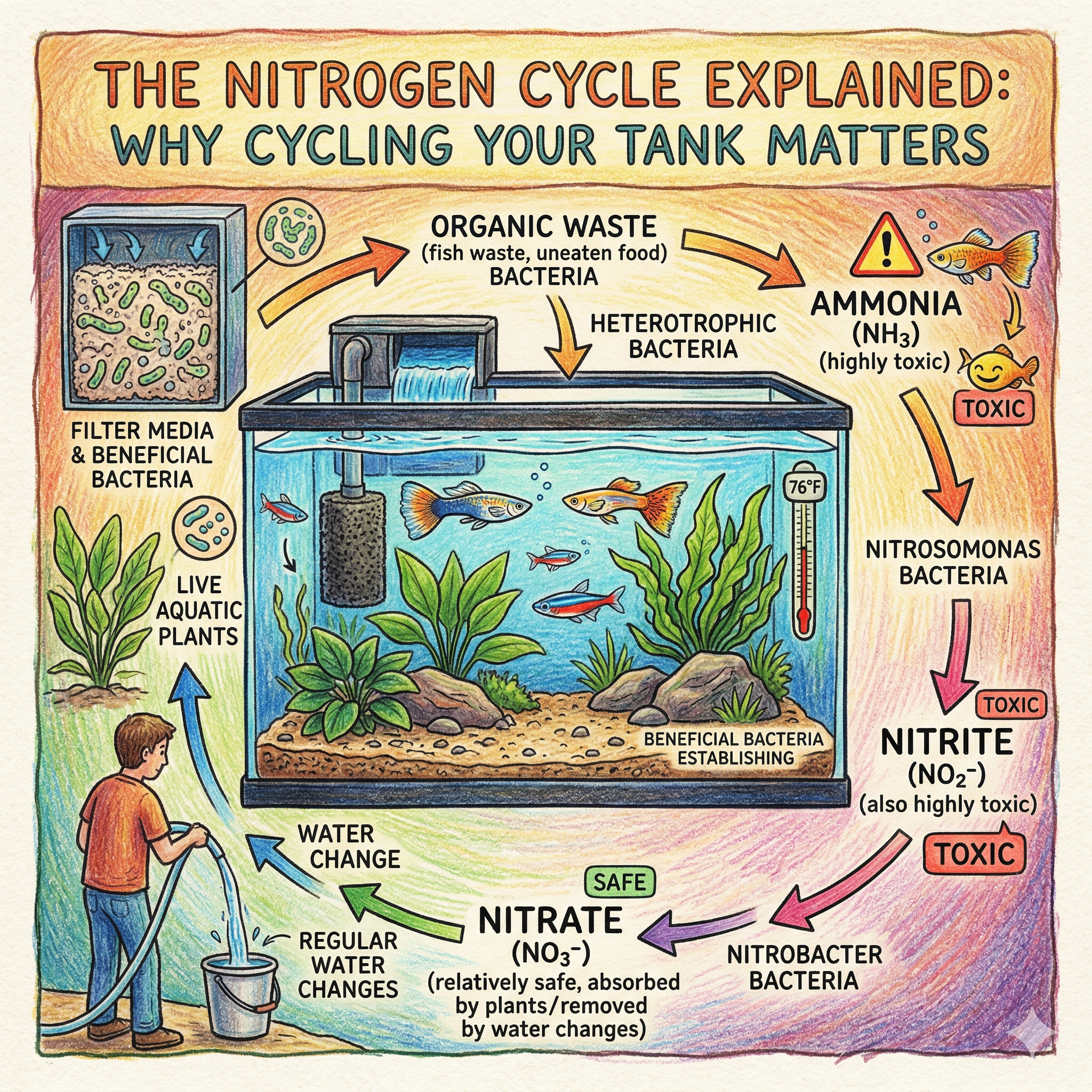
Fish constantly produce ammonia through their gills and waste. Leftover food and decaying matter add more. In nature, this ammonia gets processed by bacteria. In a new aquarium, those bacteria don’t exist yet — so ammonia builds up and poisons the fish.
Beneficial bacteria grow on filter media, substrate, and surfaces. They turn:
- Ammonia (toxic) → Nitrite (still toxic)
- Nitrite → Nitrate (much less toxic)
Nitrate is then removed through weekly water changes and absorbed by plants.
Why Cycling Matters Before Adding Fish
Adding fish to an uncycled tank is like putting someone in a room with no ventilation and then producing smoke — the toxins have nowhere to go.
Consequences I’ve seen:
- Stressed or dead fish in the first 1–3 weeks
- “New tank syndrome”
- Constant emergency water changes
- Discouraged beginners who quit the hobby
A properly cycled tank gives you a biological buffer that handles daily waste.
Two Main Ways to Cycle a Tank (2026 Comparison)
| Method | Time Required | Fish Added? | Difficulty | My Recommendation |
|---|---|---|---|---|
| Fishless Cycling | 4–8 weeks | No | Easy | Best for beginners |
| Fish-In Cycling | 4–10+ weeks | Yes | Hard | Only if you must |
| Seeded Cycling | 1–3 weeks | Usually No | Medium | Fastest safe option |
Fishless Cycling (Recommended): Add ammonia source (pure ammonia or fish food), test daily/weekly until ammonia and nitrite hit 0 ppm consistently while nitrate rises.
Seeded Cycling: Borrow filter media or substrate from an established healthy tank.
Where Beneficial Bacteria Live
- Filter media (most important)
- Sponge filters
- Substrate and gravel
- Tank walls and decor
This is why you never rinse filter media in tap water or replace all media at once.
How to Know When Your Tank Is Fully Cycled
- Ammonia stays at 0 ppm after adding a small amount
- Nitrite stays at 0 ppm
- Nitrate is measurable (usually 5–20+ ppm)
- This pattern holds for several days
Clear water is not proof the tank is cycled.
Common Beginner Cycling Mistakes I’ve Made
- Adding fish on day 1–7
- Overfeeding during cycling
- Assuming “the filter has been running” means it’s ready
- Rinsing filter media under tap water
- Believing bottled bacteria products replace patience
Full Cycling Checklist
- Tank fully set up with filter, heater, and substrate
- Using dechlorinated water
- API Master Test Kit ready
- Chosen cycling method and ammonia source
- Daily/weekly testing schedule
- No fish until ammonia + nitrite = 0 consistently
- Maintenance plan ready for after cycling
What Happens After the Tank Is Cycled
Cycling is the foundation, not the finish line. Continue with:
- Conservative stocking
- Regular 25–30% water changes
- Proper feeding
- Gentle filter maintenance
Putting It All Together
The nitrogen cycle turns a fragile glass box of water into a stable, living ecosystem. Skipping or rushing it is the #1 reason new aquarists lose fish and get discouraged. Take the time to cycle properly — especially on your first tank — and you’ll set yourself up for years of success and enjoyment instead of repeated frustration.
Ready to cycle your tank?
Use the Aquarium Wizard for a personalized cycling timeline.
Next, read my Complete Beginner Tank Setup Guide or Emergency Aquarium Troubleshooting Guide.
Keep moving from reading to action.
Use the related guides to go deeper, check the shop if you need matching accessories, or join the email list for new guides and product updates.
Get new guides, product updates, and practical aquarium planning notes by email without waiting to check back manually.
Use the contact page if you want direct help instead of general email updates.
Related Guides
Aquarium Filter Types Explained
Compare sponge, hang-on-back, canister, internal, and undergravel filters so you can choose the right aquarium filtration system for your tank size, fish, budget, and maintenance style. Real lessons from tanks in Norman, Oklahoma.
Aquarium Lighting Guide
Learn how to choose the right aquarium lighting for your home or office tank — intensity, spectrum, duration, timers, planted vs fish-only setups, and algae control. Real lessons from tanks in Norman, Oklahoma.
Aquascaping Basics: Creating Stunning Underwater Landscapes
Learn practical beginner aquascaping rules for home and office tanks — focal points, negative space, hardscape, plant grouping, and layouts that look intentional instead of cluttered. Real lessons from tanks in Norman, Oklahoma.