Betta Fish Care: Solo Tanks, Feeding & Enrichment
Betta fish are beautiful, interactive, and surprisingly hardy — but they are often misunderstood. The “bowl fish” myth has caused countless premature deaths.
In my tanks in Norman, Oklahoma, I’ve kept several bettas over the years. My first one lived in a bare 2.5-gallon with no heater and lasted only a few months. My current desk betta has thrived for over 18 months in a planted 10-gallon with gentle filtration and consistent care. The difference is night and day.
This 2026-updated guide gives you everything you need for a healthy, happy betta in a home or office setting — tank setup, feeding, tank mates, and how to catch health problems early.
Betta Care at a Glance (2026)
| Topic | Best Beginner Practice | Why It Matters |
|---|---|---|
| Tank Size | 5–10 gallons minimum | Stability and swimming space |
| Temperature | 78–82°F (stable) | Tropical fish needs |
| Filtration | Gentle (sponge or low-flow HOB) | Prevents stress on long fins |
| Feeding | Small portions 1–2× daily | Good color, digestion, water quality |
| Tank Mates | Usually solo; a few safe exceptions | Reduces aggression and stress risk |
| Enrichment | Plants, resting leaves, open space | Reduces boredom and glass pacing |
| Maintenance | 25–30% weekly water changes | Keeps water pristine in small volumes |
Why Solo Tanks Are Usually Best for Beginners
Solo setups reduce aggression risk, simplify feeding, and let you clearly observe your betta’s health. A well-designed solo tank is far from boring — it becomes a peaceful, beautiful focal point.
Choosing a Healthy Betta at the Store
Not every betta on the shelf is a good candidate. Look for:
- Active, alert movement rather than constant resting on the bottom
- Fins that are intact or only lightly torn, not clamped tight to the body
- Clear eyes, no visible spots, fuzz, or discoloration on the body
- Steady, curious response when you move your hand near the cup or tank
Avoid bettas that are gasping at the surface constantly, floating listlessly, or showing a bloated, pinecone-like body — these can signal illness that’s hard to reverse even with a perfect tank.
Best Tank Size & Setup for a Betta
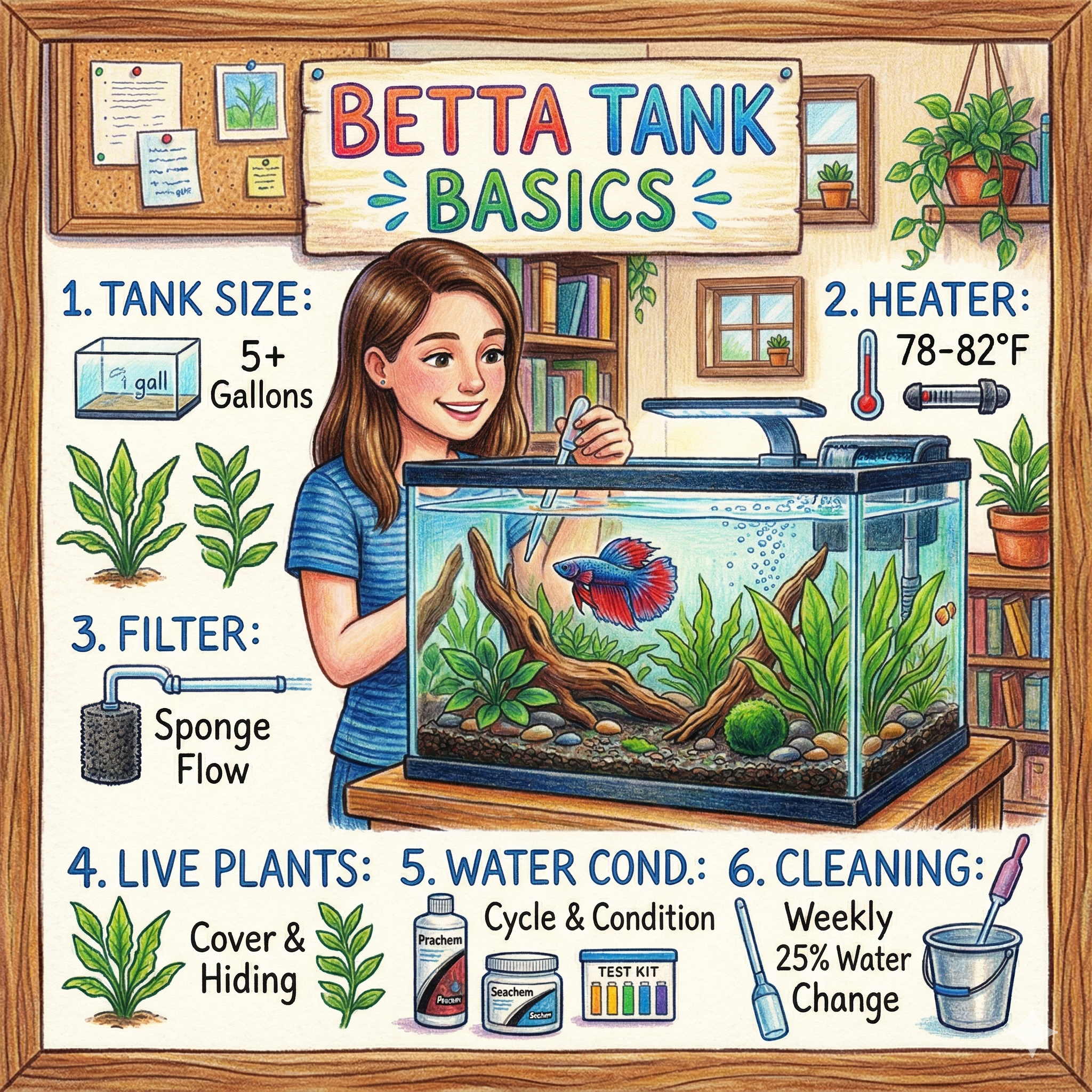
5 gallons — Good minimum for a healthy solo betta. 10 gallons — My strong recommendation for most people. More stable and forgiving.
Core Equipment (2026 recommendations):
- Aquarium + lid
- Gentle filter (sponge or adjustable HOB)
- Reliable heater (50W for 5–10 gal)
- Thermometer
- Low-to-moderate LED light with timer
- Water conditioner + test kit
Filtration: Low Flow Is Critical
Strong current stresses bettas and damages long fins. Best options: Sponge filter or baffled/adjustable hang-on-back.
Water Temperature & Parameters
Keep water 78–82°F and as stable as possible. Sudden drops are far more dangerous than a steady 76°F. Bettas do best in slightly soft, neutral-to-slightly-acidic water (pH 6.5–7.5), though most tap water treated with a conditioner works fine — stability matters more than chasing a perfect number.
Substrate, Plants & Decor
- Smooth gravel or sand
- Live plants (Anubias, Java Fern, Amazon Sword, Crypts) or high-quality silk
- Broad leaves or betta hammocks near the surface
- Avoid sharp edges
Can Bettas Have Tank Mates?
Usually, no — and that’s a feature, not a limitation. A betta on its own is calmer, easier to monitor, and lower risk. But in a properly sized tank (10 gallons or more) with good planting, a few options can work:
Occasionally compatible:
- Nerite or mystery snails — generally ignored by bettas
- Amano shrimp — larger and less likely to be treated as food than smaller shrimp
- Corydoras (in 10+ gallon tanks) — bottom-dwellers that rarely interact with a betta at the mid/upper water column
Avoid entirely:
- Other bettas or flashy male labyrinth fish — guaranteed territorial conflict
- Fin-nippers such as tiger barbs or serpae tetras — they target long fins relentlessly
- Small, brightly colored fish that resemble another betta — some bettas will attack on sight
Every betta has an individual temperament. Even “safe” tank mates should be added slowly with an escape plan (a spare tank or container) if aggression shows up.
Feeding a Betta Properly
My daily routine: 1–2 small meals per day, only what they eat in 2–3 minutes.
Recommended foods (2026):
- High-quality betta pellets (e.g., Fluval Bug Bites, Hikari Betta)
- Frozen or freeze-dried bloodworms/brine shrimp 1–2× per week
- Occasional daphnia or micro worms
Feeding Ring Tip: Extremely helpful in planted tanks to keep food from sinking into substrate.
Enrichment Ideas That Actually Work
A solo betta still needs mental stimulation:
- Multiple resting spots at different heights
- Gentle current variation (e.g., air stone on timer)
- Occasional safe new leaf or decor rotation
- Mirror training (short sessions only)
- Live plants for natural foraging
Weekly Maintenance Routine
- Daily: Observe behavior & appetite
- Weekly: 25–40% water change (match temperature)
- Every 2 weeks: Gentle filter rinse in tank water
- Monthly: Deep substrate vacuum if needed
Signs of a Happy, Healthy Betta
- Bright, consistent color
- Active exploration + normal resting
- Good appetite
- Smooth, undamaged fins
- No glass pacing or lethargy
Recognizing Common Betta Health Problems
Catching illness early is often the difference between a quick recovery and a lost fish.
- Fin rot – Fins look ragged, discolored, or shrinking. Usually caused by poor water quality; treat with clean water and consistent maintenance, and add medication if it progresses.
- Ich (white spot disease) – Tiny white dots across the body and fins, often with flashing (rubbing against decor). Raise temperature gradually and treat with an ich medication.
- Velvet – A fine gold or rust-colored dusting on the skin, best seen under a flashlight in a darkened room. Treat promptly — velvet spreads fast.
- Swim bladder issues – Trouble staying upright or swimming level, often linked to overfeeding or constipation. A short fast (24–48 hours) frequently resolves mild cases.
- Dropsy – Pinecone-like raised scales and a bloated body. This is a late-stage symptom of internal illness with a low recovery rate; isolate the fish and consult a fish-specific resource or vet immediately if you have one available.
Whenever something looks off, the first response is always the same: test your water, do a water change, and confirm temperature stability before reaching for medication.
Common Betta Care Mistakes (That I’ve Made)
- No heater or unstable temperature
- Too much filter flow
- Overfeeding
- Bare tank with no enrichment
- Adding tank mates too early
- Ignoring early fin damage instead of checking water quality first
Final Verdict
A thriving betta in 2026 comes from treating it like a real tropical fish instead of a low-effort decoration. Give it a 5–10 gallon heated, gently filtered tank with plants, consistent feeding, thoughtful enrichment, and a quick eye for early health changes, and you’ll enjoy years of personality and beauty from your fish.
Ready to build one? Use the Aquarium Wizard for a personalized betta setup recommendation. Next, read my Best Beginner Fish for Small Tanks or Complete Beginner Tank Setup Guide.
Keep moving from reading to action.
Use the related guides to go deeper, check the shop if you need matching accessories, or join the email list for new guides and product updates.
Get new guides, product updates, and practical aquarium planning notes by email without waiting to check back manually.
Use the contact page if you want direct help instead of general email updates.
Related Guides
Aquarium Filter Types Explained
Compare sponge, hang-on-back, canister, internal, and undergravel filters so you can choose the right aquarium filtration system for your tank size, fish, budget, and maintenance style. Real lessons from tanks in Norman, Oklahoma.
Aquarium Lighting Guide
Learn how to choose the right aquarium lighting for your home or office tank — intensity, spectrum, duration, timers, planted vs fish-only setups, and algae control. Real lessons from tanks in Norman, Oklahoma.
Aquascaping Basics: Creating Stunning Underwater Landscapes
Learn practical beginner aquascaping rules for home and office tanks — focal points, negative space, hardscape, plant grouping, and layouts that look intentional instead of cluttered. Real lessons from tanks in Norman, Oklahoma.